Save £38
Costway5.0(2)
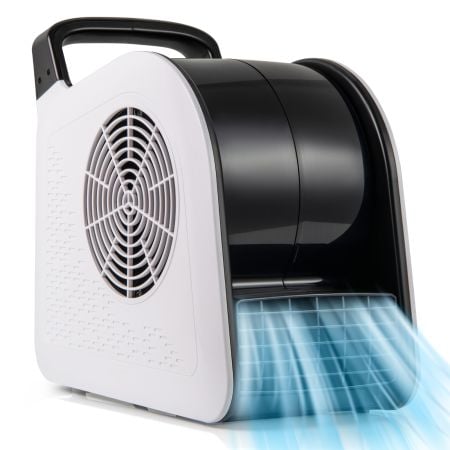
Air Mover Carpet Dryer with 3 Speeds 185° Pivoting Head and 1 AC Outlet
Fan
Free delivery · 2–4 working days
£54.95£92.95
● In stockA good tower fan is the cheapest way to feel cooler this summer, and our range of fans and air circulators covers every room and budget. We stock around 106 models, from slim 36-inch tower fans and full-size pedestal fans to compact desk fans, USB fans, powerful air circulators and bladeless fans, including quiet DC-motor favourites like the MeacoFan, plus Duux, Pro Breeze and Igenix. With free UK delivery and most models in stock, you can have proper airflow moving by the weekend.
This is the question most UK shoppers ask, and the answer is reassuring. A standard AC-motor tower fan draws roughly 40-50 watts, so at the current price cap of about 26p per kWh it costs only around 1p to 1.3p an hour to run. A premium DC-motor fan such as the MeacoFan 1056 sips as little as 3.5 watts on its lowest setting, well under half a penny an hour. By contrast, a portable air conditioner pulls 900-1,200 watts, costing roughly 23-31p an hour, so a fan is dramatically cheaper to run all night. Fans are rated in watts, not BTU, because they move air rather than remove heat.
For bedroom use, noise matters more than airflow. Look for the dB rating and a dedicated sleep mode with a timer. DC-motor fans and Quiet Mark certified models are the quietest for sleeping, often dipping below 25dB on low. Beyond that, match the type to the job: a 36-inch tower fan for tidy living-room cooling, a height-adjustable pedestal fan for wider coverage, an air circulator to push air across a large room, and a desk or USB fan for the home office.
An honest note: a fan cools you, not the room, by helping sweat evaporate. If you genuinely need to drop the temperature, that is the point to consider a portable air conditioner instead, though it will cost far more to run.
106 products


1. Pick the type for the space. Tower fans suit living rooms and bedrooms where floor space is tight; pedestal fans give wider, height-adjustable coverage; air circulators move air across large or stuffy rooms; desk and USB fans handle a workspace.
2. Prioritise noise for bedrooms. Check the dB rating, and favour a sleep mode, sleep timer and a remote control. Quiet Mark certified and DC-motor fans are the quietest options for sleeping.
3. Choose DC over AC to save energy. DC-motor fans use far less power (some under 4W), run quieter and offer more speed steps. AC-motor fans cost less upfront and suit occasional use.
4. Match coverage to the room. Look for wide oscillation (up to 350-degree on some circulators) and check CFM airflow for larger spaces.
5. Add convenience features. Remote control, app control, ECO mode and an ioniser are worth having if you'll use the fan daily.
Very little. A typical tower or pedestal fan uses around 40-50 watts, so at roughly 26p per kWh it costs only about 1p to 1.3p an hour. A low-energy DC-motor fan can cost under half a penny an hour on its lowest setting. Even running all night, you're looking at just a few pence.
Most AC-motor tower fans draw between 40 and 60 watts at full speed. Efficient DC-motor models like the MeacoFan range use far less, from around 3.5 watts on low up to roughly 30 watts on high. Fans are rated in watts rather than BTU because they circulate air instead of removing heat from the room.
DC-motor fans are the quietest for sleeping, often dropping below 25dB on their lowest setting, which is barely audible. Look for a model with a dedicated sleep mode and a sleep timer, and ideally one that is Quiet Mark certified. Tower and bladeless fans tend to be quieter than basic AC pedestal fans.
Neither is simply better; it depends on the room. Tower fans are slim, take up little floor space and look tidy in a bedroom or living room. Pedestal fans are height-adjustable and usually push more air over a wider area, making them better for cooling larger or busier spaces.
A pedestal fan has a traditional bladed head on an adjustable stand, so you can raise, lower and tilt it for wider, more powerful airflow. A tower fan is a tall, slim column that oscillates from a fixed height, giving a smoother, quieter draught and a more compact footprint. Pedestal fans often move more air; tower fans usually look neater and run quieter.
Buy a fan if you mainly want to feel cooler cheaply and quietly, as it costs only pennies an hour to run. Choose a portable air conditioner if you genuinely need to lower the room's temperature, for example in a hot south-facing bedroom or home office. Bear in mind portable ACs cost far more to run and need their exhaust hose vented out of a window, so they aren't truly hose-free.
A fan is far cheaper. A fan typically costs around 1p an hour, whereas a portable air conditioner drawing 900-1,200 watts costs roughly 23-31p an hour at 26p per kWh. Over a hot week that difference adds up significantly, so a fan is the better choice when you only need to feel cooler rather than chill the room.
DC-motor fans are more energy-efficient, quieter and offer more speed settings, often using under 4 watts on low, which makes them ideal for bedrooms and all-day use. AC-motor fans are cheaper to buy and perfectly good for occasional cooling. If running costs and quiet operation matter to you, a DC fan is the better long-term buy.